Menopause in India: The Complete Guide to Symptoms, Stages, Testing and Relief
Menopause is not a disease. It is a natural biological transition that marks the end of a woman's reproductive years. In India, women reach menopause at an average age of around 46 to 47 years, nearly five years earlier than the global average of 51. This means Indian women begin experiencing perimenopausal symptoms in their late 30s to early 40s, often without realising what is happening to their bodies. This guide covers every stage of the menopause transition, what symptoms are common in Indian women specifically, how at-home menopause test kits work and what they can and cannot tell you, and what actually helps manage the symptoms that affect daily life.
Most women find out about menopause the same way they find out about most things related to their body: after the fact.
A period that starts behaving differently. A heat that rises through the chest and face without warning. Three nights of broken sleep in a row. Mood shifts that feel disproportionate to what triggered them. A word that was right there and then just gone.
By the time a woman connects these things to menopause, she has often already been living with them for months or years. In India, where menopause is rarely spoken about openly and arrives earlier than in most countries, that gap between symptoms and understanding is even wider.
This guide closes that gap.
What Is Menopause
Menopause is defined as the point in time when a woman has not had a menstrual period for twelve consecutive months. It is not a phase or a process. It is a single moment in time, confirmed only in hindsight.
The years leading up to that point are called perimenopause. The years after are postmenopause. Together, all three phases are often referred to informally as the menopause transition.
Menopause happens because the ovaries gradually reduce their production of estrogen and progesterone, the hormones that regulate the menstrual cycle and affect many other systems in the body. As these hormones decline, the cycle becomes irregular and eventually stops.
The Three Stages of the Menopause Transition
Perimenopause
Perimenopause is the transitional phase that begins several years before the last period. During this phase, hormone levels fluctuate unpredictably rather than declining in a smooth, gradual way. This fluctuation is what drives most of the symptoms women associate with menopause.
According to the Indian Menopause Society's PAN India survey, Indian women begin the perimenopausal stage at an average age of approximately 44.69 years, though it can start several years earlier. Perimenopause typically lasts between four and eight years, though some women experience it for a shorter or longer period.
This is the stage most women are in when symptoms first appear, and it is the stage most often misidentified as stress, burnout, or simply getting older.
Menopause
Menopause is confirmed after twelve consecutive months without a period. According to the PAN India survey by the Indian Menopause Society published in the Journal of Mid-Life Health in 2016, the average age of menopause in India is 46.2 years. A systematic review published in the journal Maturitas puts the figure at 46.6 years with a 95 percent confidence interval of 44.83 to 48.44 years.
This is four to five years earlier than the global average of around 51 years in higher income countries. It means Indian women enter the postmenopausal phase of life earlier and spend more years in it.
Postmenopause
Postmenopause begins from the day after menopause is confirmed and lasts for the rest of a woman's life. Estrogen levels stabilise at a lower level and many symptoms gradually ease, though some, particularly vaginal dryness and bone density changes, tend to persist or worsen over time.
Given that the average life expectancy for women in India is approximately 71 years, an Indian woman reaching menopause at 46 can expect to spend around 25 years in the postmenopausal stage. This makes managing postmenopausal health a significant long term priority.
When Does Menopause Happen in India
The most important India-specific fact about menopause is the age at which it arrives.
According to the PAN India survey by the Indian Menopause Society, the average age of natural menopause in India is 46.2 years, compared to 51 years in Western countries. A systematic review of Indian studies published in Maturitas in 2021 confirms the figure at 46.6 years, and notes that average age at menopause varies by region: approximately 45.5 years in North India and 47.8 years in Central India.
What this means practically is that a woman who expects menopause to arrive in her early 50s may be experiencing significant perimenopausal symptoms a full decade before that.
What Increases the Risk of Earlier Menopause in India
Several factors can cause menopause to arrive earlier than average.
Smoking is one of the most well documented. Studies consistently show that smoking is associated with menopause arriving one to two years earlier.
Family history plays a significant role. If a woman's mother reached menopause early, she is more likely to as well.
Surgical removal of the ovaries, called surgical menopause, brings on an immediate menopause regardless of age. According to the Third Consensus Meeting of the Indian Menopause Society, there is an increased burden of surgical menopause in India, which makes it an important consideration for women who have had gynaecological surgery.
Certain cancer treatments including chemotherapy and pelvic radiation can also trigger premature or early menopause.
Socioeconomic factors also appear to play a role in India. The IMS PAN India survey found significant correlation between lower socioeconomic and educational status and an earlier age of menopause.
What Are the Symptoms of Menopause
Symptoms vary significantly between women, and in India, the pattern of symptoms differs somewhat from what Western studies have described.
According to a study of 1,765 Indian women published in the journal Climacteric, 75.3 percent of women reported vasomotor symptoms, 62.01 percent reported psychological symptoms, 32 percent reported physical ailments, and 15.53 percent reported genitourinary symptoms.
According to the Indian Menopause Society's consensus, urogenital symptoms, fatigue, weakness, and body aches are among the predominant symptoms in both rural and urban Indian women. Hot flushes, psychological symptoms, mood swings, and sexual dysfunction are seen more frequently in urban women.
Vasomotor Symptoms: Hot Flashes and Night Sweats
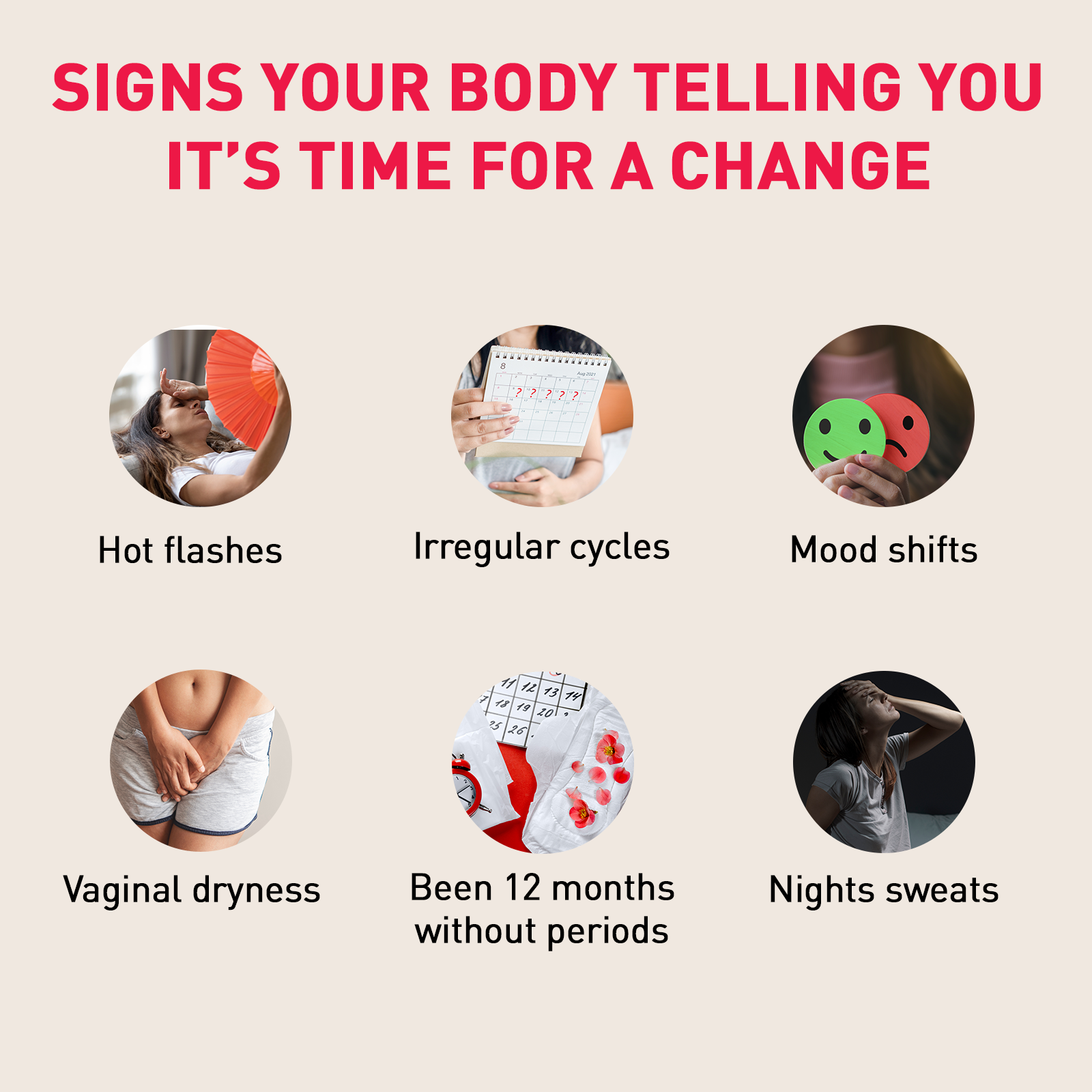
Hot flashes are the most widely recognised symptom of menopause globally and in India. A hot flash is a sudden wave of heat, usually starting in the chest and rising to the face and neck, often accompanied by redness and sweating. They can last from a few seconds to several minutes.
Night sweats are hot flashes that occur during sleep. They can be intense enough to disrupt sleep repeatedly, leaving the person exhausted and unable to return to sleep easily.
Hot flashes happen because declining estrogen affects the hypothalamus, the part of the brain that regulates body temperature. It temporarily misreads the body's temperature and triggers a cooling response.
For immediate relief during a hot flash, the Sirona cooling mist can be sprayed on the face, neck, and pulse points. It is portable enough to carry during the day or keep on a bedside table for night sweats.
Mood Changes, Irritability, and Anxiety
Estrogen affects the brain's production of serotonin and other neurotransmitters that regulate mood. As estrogen fluctuates during perimenopause and declines in menopause, mood shifts, irritability, anxiety, and low mood become more common.
These symptoms are most intense during perimenopause, when hormone fluctuations are greatest. They often improve once hormone levels stabilise in postmenopause, though not always.
It is important to distinguish between menopause-related mood changes and depression. If low mood is persistent, severe, or affecting daily functioning, it is worth seeing a doctor rather than attributing everything to hormones.
Sleep Disturbances
Difficulty falling asleep, waking in the night, and early morning waking are all common during the menopause transition. Night sweats directly disrupt sleep. But even without night sweats, declining progesterone, which has a naturally calming effect on the brain, can reduce sleep quality independently.
Poor sleep amplifies every other symptom. Managing the root causes of sleep disruption, including night sweats, temperature control, and stress, tends to improve overall wellbeing during this phase.
Irregular Periods
Before periods stop altogether, they typically become irregular during perimenopause. Cycles can become shorter or longer, flow can become heavier or lighter, and periods can be skipped entirely. This irregularity can last for several years before the last period.
Irregular periods during perimenopause do not automatically mean something is wrong. But any sudden very heavy bleeding, bleeding between periods, or bleeding after menopause has been confirmed should always be assessed by a doctor.
Brain Fog
Many women describe a foggy quality to their thinking during the menopause transition: forgetting words, losing track of thoughts, difficulty concentrating, reduced mental sharpness. This is linked to fluctuating estrogen, which affects blood flow and neurotransmitter activity in the brain.
Brain fog related to menopause is real, documented, and in most cases temporary. It tends to ease as the transition progresses and hormone levels stabilise.
Vaginal Dryness and Urinary Changes
As estrogen declines, the tissue lining the vagina and urethra becomes thinner, less elastic, and less lubricated. This can cause dryness, itching, irritation, and discomfort or pain during sex.
It can also cause urinary urgency, more frequent urination, and increased susceptibility to urinary tract infections. These changes fall under a clinical category called genitourinary syndrome of menopause, and unlike hot flashes, they tend to worsen rather than improve over time without appropriate care.
Keeping the intimate area clean and comfortable with a gentle pH balanced intimate wash is part of managing comfort in this phase, as the tissue becomes more sensitive and more easily irritated by harsh products.
Joint Pain, Fatigue, and Body Aches
Body aches, joint pain, and persistent fatigue are consistently among the most commonly reported symptoms in Indian women, noted prominently in Indian Menopause Society data. These are less often discussed in global menopause conversations, which tend to focus on hot flashes, but they are a real and significant part of the experience for many Indian women.
Bone Density Changes
Estrogen plays an important protective role in bone health. When it declines at menopause, the rate of bone loss accelerates significantly. According to the Indian Menopause Society, osteoporosis presents a decade earlier in Indian women than in Western women, making bone health a particularly important concern during and after menopause in India.
Adequate calcium and vitamin D intake, weight bearing exercise, and regular bone density monitoring become important from perimenopause onward.
How to Test for Menopause at Home
What Does a Menopause Test Kit Measure
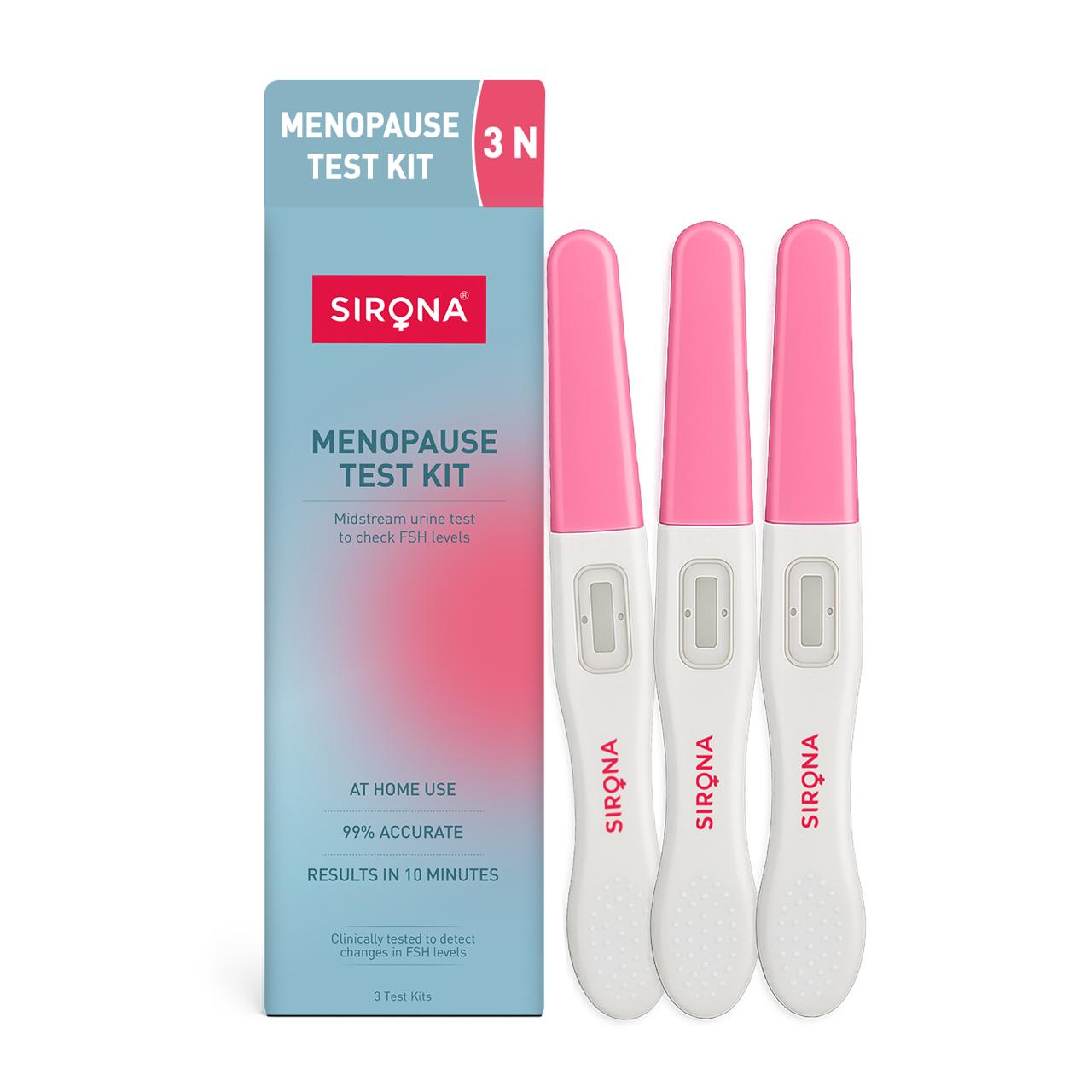
A menopause test kit measures follicle-stimulating hormone, or FSH, in urine. FSH is produced by the brain to stimulate the ovaries. As the ovaries become less responsive to FSH with age, the brain produces more of it in an effort to prompt ovarian activity. Elevated FSH levels in urine therefore indicate that the ovaries are producing less estrogen, which is consistent with perimenopause or menopause.
The Sirona menopause test kit detects elevated FSH levels in urine, giving you a first indication of whether your body's hormonal profile is consistent with the menopause transition, without needing to go to a clinic.
How to Use the Sirona Menopause Test Kit
The process is similar to using a pregnancy test.
Step one: Collect a urine sample in a clean, dry container. Morning urine is typically recommended as FSH levels are more concentrated.
Step two: Dip the test strip into the urine sample for the time indicated in the kit instructions.
Step three: Remove the strip and lay it flat for the required waiting time, typically a few minutes.
Step four: Read the result. Two lines indicate elevated FSH consistent with perimenopause or menopause. One line indicates FSH is not significantly elevated.
Step five: Because FSH levels can fluctuate from day to day during perimenopause, testing on two to three different days and looking at the overall pattern gives a more reliable picture than a single test.
What a Menopause Test Kit Can and Cannot Tell You
This is important to understand before testing.
A menopause test can tell you whether your FSH levels are elevated, which is consistent with the hormonal changes of perimenopause or menopause.
A menopause test cannot tell you with certainty that you are in menopause. Menopause is a clinical diagnosis based on twelve consecutive months without a period, combined with your symptom history and age. According to Cleveland Clinic, there is no definitive diagnostic test for menopause: diagnosis is made based on symptoms and menstrual cycle history.
FSH levels also fluctuate significantly during perimenopause, which means a single elevated result does not confirm menopause, and a single normal result does not rule it out. According to the FDA, home menopause test kits detect elevated FSH correctly about 90 percent of the time.
The test is most useful as a first step that helps you have a more informed conversation with your doctor, not as a substitute for that conversation.
What Actually Helps With Menopause Symptoms
Hormone Replacement Therapy
Hormone replacement therapy, or HRT, replaces declining estrogen and progesterone and is one of the most effective approaches for managing significant menopausal symptoms, including hot flashes, mood changes, sleep disruption, and vaginal dryness. It also helps protect bone density.
HRT has been extensively studied and its risks and benefits are well understood. Whether it is appropriate depends on your individual health history and should be discussed with a gynaecologist or physician.
Managing Hot Flashes Day to Day
Identifying and avoiding triggers helps. Common triggers include caffeine, alcohol, spicy food, hot beverages, and stress. Keeping rooms well ventilated and wearing lightweight, breathable fabrics can reduce intensity.
During a flash, a cooling mist provides immediate temperature relief on the face and neck.
Intimate Comfort During Menopause
Vaginal dryness tends to worsen without attention. Water based lubricants help with immediate discomfort during intimacy. For day to day maintenance, keeping the intimate area clean with a gentle, pH balanced intimate wash and avoiding harsh soaps that further irritate already sensitive tissue makes a practical difference. Intimate wipes are a useful option for freshening up gently through the day.
Sleep Support
Keeping the bedroom cool and well ventilated reduces night sweat severity. Avoiding caffeine and alcohol in the evening reduces both the frequency of night sweats and their impact on sleep. A consistent sleep and wake time helps stabilise the sleep cycle even when it is being disrupted.
Bone and Cardiovascular Health
Weight bearing exercise such as walking, strength training, or yoga supports bone density and cardiovascular health. Adequate calcium from dairy, leafy greens, and seeds, alongside vitamin D from sunlight and food sources, supports bone maintenance during a period when loss is accelerated.
Lifestyle Adjustments That Help Across Symptoms
Regular moderate exercise is consistently associated with reduced severity of hot flashes, better mood, better sleep, and better long term health outcomes during and after menopause. It does not eliminate symptoms but meaningfully reduces their impact for many women.
Stress management matters more during this transition than at other times because the hormonal system is less resilient. Practices like yoga, walking, or consistent rest that lower the overall stress load tend to reduce the intensity of symptoms across the board.
Menopause and the Indian Context
Menopause in India carries cultural dimensions that make it harder for many women to seek help or even name what they are experiencing.
In many households, menopause is not discussed. Symptoms are attributed to ageing, stress, or weakness rather than recognised as a physiological transition. Many women feel embarrassed to speak about symptoms like vaginal dryness or reduced libido with a doctor, or are unsure those symptoms are related to menopause at all.
This silence has a cost. Indian women reach menopause earlier, face bone density concerns sooner, and live with a longer postmenopausal phase than women in most other countries. Early awareness and early care make a meaningful difference to long term health outcomes.
The first step is simply knowing that what you are experiencing has a name, a cause, and, in many cases, a solution.
When to See a Doctor
See a doctor if:
You are experiencing symptoms that significantly affect your quality of life, including severe hot flashes, significant mood changes, or sleep disruption
Your periods have become very heavy, irregular in a way that concerns you, or you are bleeding between periods
You have any bleeding after twelve months without a period, which always needs medical assessment
You have joint pain, fatigue, or body aches that are persistent and unexplained
You want to discuss whether hormone replacement therapy or other medical management is appropriate for you
You are under 40 and showing signs of menopause, which may indicate premature ovarian insufficiency needing specialist assessment
A gynaecologist or physician familiar with menopause can assess your symptoms, review your cycle history, and help you understand what management approach suits your health profile.
Conclusion
Menopause is a transition, not an illness. But it deserves to be understood and managed rather than quietly endured. Indian women face this transition earlier than women in most countries, often while managing careers, families, and households, and frequently without the language or context to connect what they are experiencing to a hormonal shift. A menopause test kit is a practical first step to understanding where you might be in the transition. A conversation with a doctor is the next one. And the knowledge that hot flashes, mood changes, sleep disruption, vaginal dryness, joint pain, and brain fog all have real physiological explanations, and real options for relief, is the foundation everything else rests on.
Please Note:This content is for informational purposes only and should not replace medical advice. If your symptoms are persistent, severe, unusual, or affecting your daily life, please consult a qualified doctor or gynaecologist for personalised guidance.





 Save 28% Off